
Fertility treatment · Jalgaon
ICSI treatment in Jalgaon
Intracytoplasmic sperm injection (ICSI) is a laboratory fertilization technique used as part of some IVF treatment plans. Learn what it involves and what to discuss with your specialist.
Fertility treatment
ICSI treatment
ICSI is performed in a laboratory as part of IVF. Whether it may be appropriate depends on individual clinical factors and the assessment of the fertility team. A clinician can explain why it may be considered in your case, including potential benefits, limitations, risks, and alternatives.
Understanding the procedure
What is intracytoplasmic sperm injection?
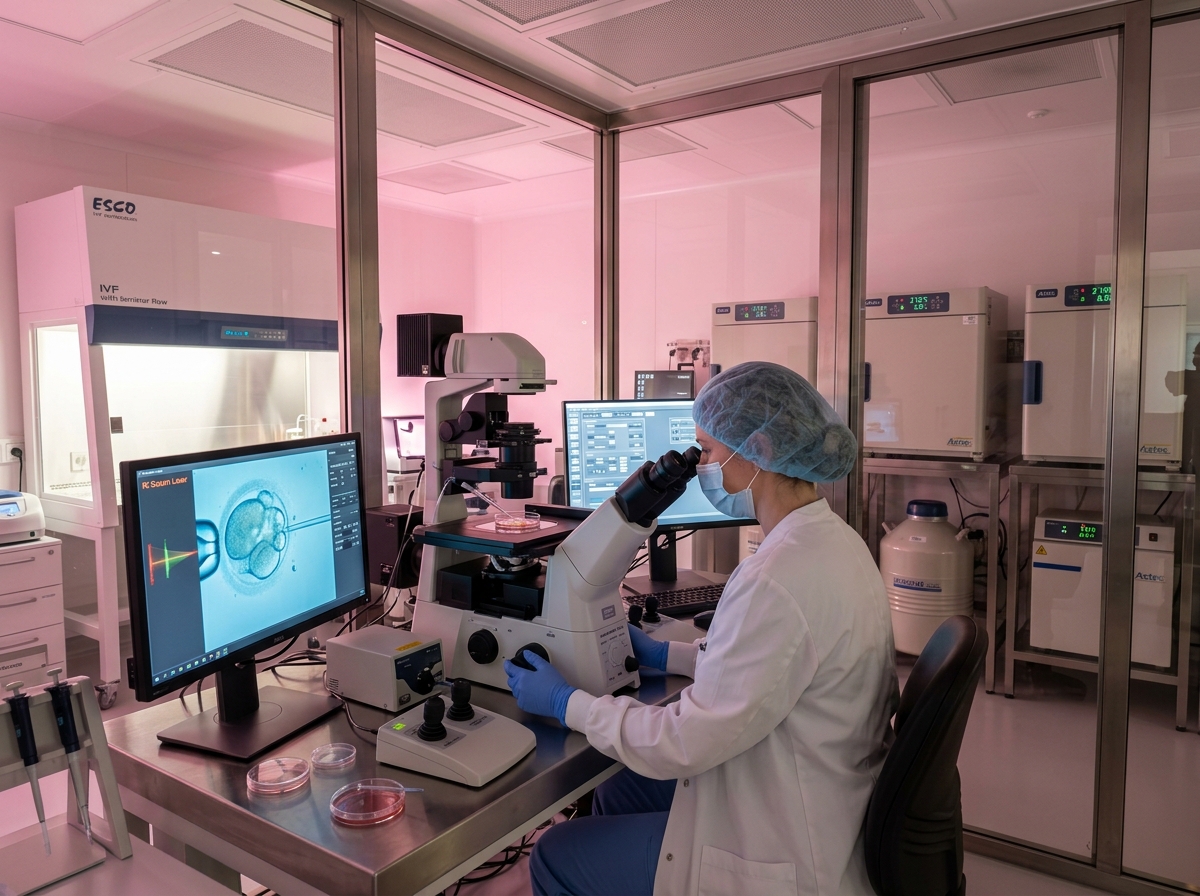
In ICSI, an embryologist uses a fine laboratory instrument to inject a single sperm into a mature egg. The eggs are then observed for fertilization and development. If embryos develop, the care team discusses possible transfer or freezing options based on the treatment plan.
ICSI does not guarantee fertilization, embryo development, or pregnancy. Your specialist can explain how it differs from conventional IVF and why one approach may be considered.
Explore the interactive ICSI modelIndividual assessment
Who may discuss ICSI with a specialist?
ICSI may be discussed in some treatment situations. These examples do not mean it is automatically recommended.
- Some sperm-related findings, such as low count or reduced movement
- Sperm obtained through a medical retrieval procedure
- Previous IVF fertilization outcomes, after clinical review
- Some treatment plans involving previously frozen eggs
Age alone does not determine whether ICSI is appropriate. Your specialist can explain how your assessment and treatment history affect the options.
Your care plan may vary
What to expect during ICSI treatment
- 01
Consultation and planning
A clinician reviews relevant history and test results, then explains whether IVF with ICSI or another approach may be considered.
- 02
Ovarian stimulation and monitoring
If egg retrieval is part of the plan, medication and monitoring may be used. The medicines and schedule are individualized.
- 03
Egg collection and sperm preparation
Egg collection and sperm preparation are arranged as part of the treatment plan. Ask your care team about preparation, sedation or anaesthesia, and recovery.
- 04
ICSI in the laboratory
An embryologist uses laboratory equipment to inject one sperm into a mature egg. Fertilization and embryo development cannot be guaranteed.
- 05
Embryo care and next steps
The team monitors embryos and discusses transfer or cryopreservation options, if appropriate. Your clinician explains the timing and follow-up.
After treatment
Follow the plan from your care team
Medication, activity, and follow-up instructions depend on the treatment you receive. Confirm your plan with the clinic and contact your care team if you have concerns.
- Follow the medication instructions provided for your treatment; do not change doses without advice.
- Ask when to return, when to test, and how results will be shared.
- Ask which symptoms need urgent assessment and whom to contact outside clinic hours.
- After egg retrieval, seek prompt medical advice for severe pain, fever, heavy bleeding, fainting, or symptoms that concern you.
Fertility and embryology team
Meet the specialists
Dr. Nitin Vasant Chaudhari consults on fertility care. The clinic team can explain which specialists and embryology professionals are involved in your treatment.
View the care teamICSI treatment FAQs
Will ICSI hurt either partner?
The injection is performed on an egg in the laboratory, not inside a person. Other parts of an IVF cycle, such as injections or egg collection, may involve discomfort or risks; your clinician should explain what applies to you.
How many ICSI cycles might be needed?
There is no fixed number or guaranteed outcome. Further decisions depend on your circumstances, treatment response, preferences, and the discussion with your clinician.
Can ICSI help when sperm count is low?
ICSI may be considered in some situations involving sperm factors, but suitability depends on clinical assessment and laboratory findings. A specialist can explain alternatives and limitations.
Is ICSI always better than conventional IVF?
No. ICSI is a specific fertilization technique and is not necessarily appropriate for every IVF cycle. Ask your specialist why it is being recommended and what alternatives may be suitable.
Does ICSI guarantee fertilization or pregnancy?
No. ICSI does not guarantee that an egg will fertilize, that an embryo will develop, or that pregnancy will occur. Outcomes vary between individuals and treatment cycles.
Have questions about your care options?
Contact Jalgaon IVF to ask about a consultation and current clinic information.
This page provides general educational information and is not medical advice. Treatment options and outcomes vary by individual. Consult a qualified healthcare professional about your circumstances.