Egg freezing
Unfertilized eggs are collected and stored. This may be considered in some fertility-preservation situations or for personal reasons after clinical consultation. Future use requires further treatment and does not guarantee a pregnancy.

Fertility treatment · Jalgaon
Cryopreservation is a way to store eggs or embryos for possible future use. Learn the differences, key decisions, and questions to ask before choosing storage.
Understanding storage
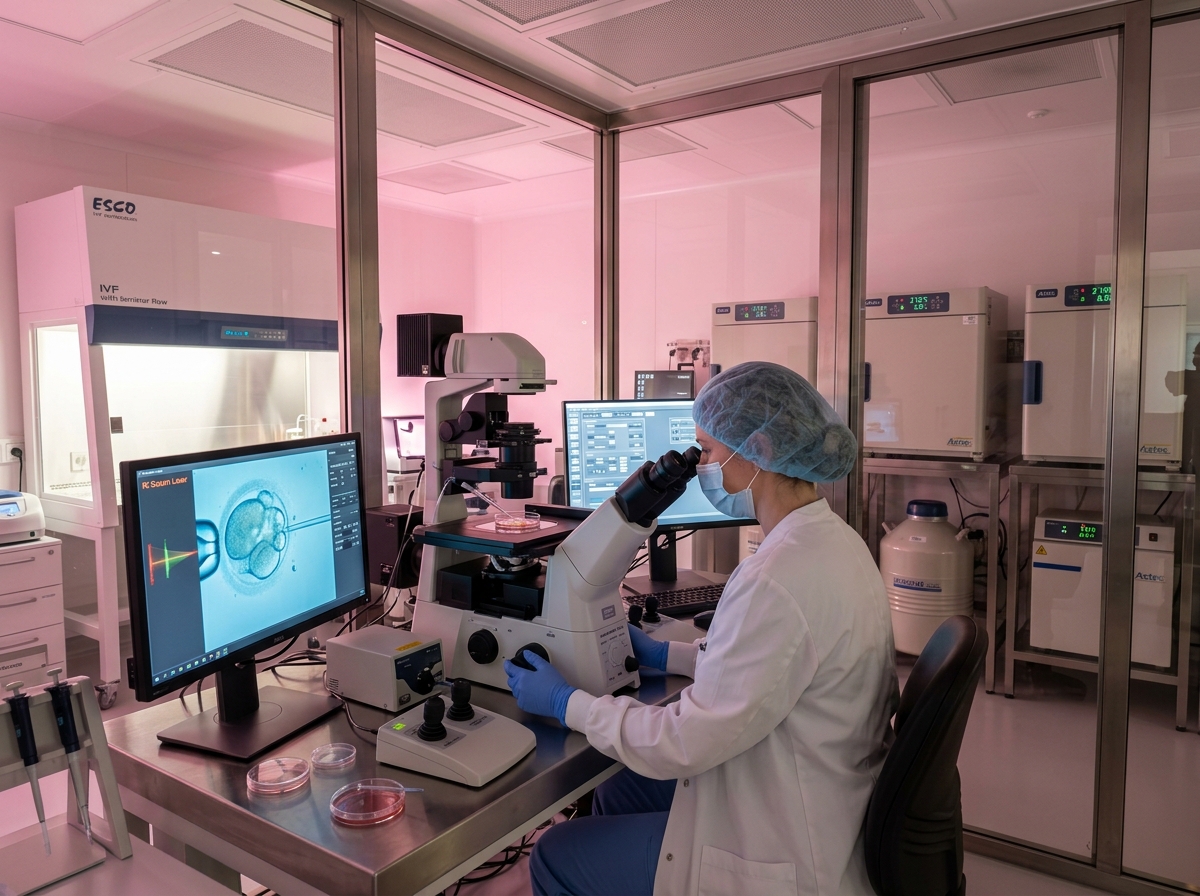
Cryopreservation means freezing and storing reproductive cells or embryos at very low temperatures for possible later use. Eggs, sperm, and embryos are different materials and may have different steps, consent requirements, and future-use considerations.
Freezing does not stop biological aging for the person, and it cannot guarantee that stored material will later result in a pregnancy or birth. A clinician and embryology team can explain the process, expected limitations, costs, and current storage terms.
Two different options
Unfertilized eggs are collected and stored. This may be considered in some fertility-preservation situations or for personal reasons after clinical consultation. Future use requires further treatment and does not guarantee a pregnancy.
Eggs are fertilized and resulting embryos may be frozen for possible later use. This involves decisions about consent and future use by the people whose reproductive material is involved, subject to applicable law and clinic policy.
The right choice depends on medical circumstances, preferences, consent, and applicable requirements. Ask the clinic to explain the differences before making a decision.
Discuss with a clinician
Cryopreservation is not suitable or useful for everyone. A specialist can discuss timing, expected outcomes, alternatives, and the implications for your situation.
Before you decide
Ask for clear information and time to review consent documents. Storage and future use involve medical, personal, financial, and legal considerations.
Laboratory and storage
The exact steps depend on whether eggs, embryos, or sperm are being stored and the clinic’s current services and procedures.
A specialist can discuss why freezing may be considered, whether egg or embryo freezing fits your circumstances, and what alternatives are available.
Before storage, ask about consent, identification and record-keeping, storage duration and renewal, fees, contact updates, and what happens if circumstances change.
Eggs or embryos selected for freezing are prepared and cooled using a laboratory method such as vitrification, if available and appropriate.
Stored material is maintained under clinic procedures. Future use, continued storage, or other decisions depend on consent, clinical advice, applicable law, and clinic policy.
No. Freezing preserves eggs or embryos for possible future use, but does not guarantee survival after thawing, fertilization, implantation, pregnancy, or birth. Outcomes depend on individual and treatment factors.
Storage periods, renewal requirements, fees, and legal rules may change and depend on the material stored and the applicable policy. Ask the clinic for its current written terms before deciding.
No. Egg freezing stores unfertilized eggs. Embryo freezing stores embryos formed after fertilization. Each option has different medical, personal, legal, consent, and treatment considerations.
Not every egg or embryo will survive freezing and thawing, and outcomes vary. Your embryology team can explain the method used, its limitations, and what information is available for your case.
Ask for the clinic's consent documents and written policy about continued storage, renewal, changes in wishes, and circumstances where you or a partner cannot be contacted or make decisions.
Contact Jalgaon IVF to ask about a consultation and current clinic information.
This page provides general educational information and is not medical advice. Treatment options and outcomes vary by individual. Consult a qualified healthcare professional about your circumstances.