
Fertility treatment · Jalgaon
Assisted hatching in Jalgaon
Assisted hatching is a laboratory technique that may be considered in some IVF treatment plans. Learn what it involves and discuss its uncertain benefits and potential risks with your specialist.
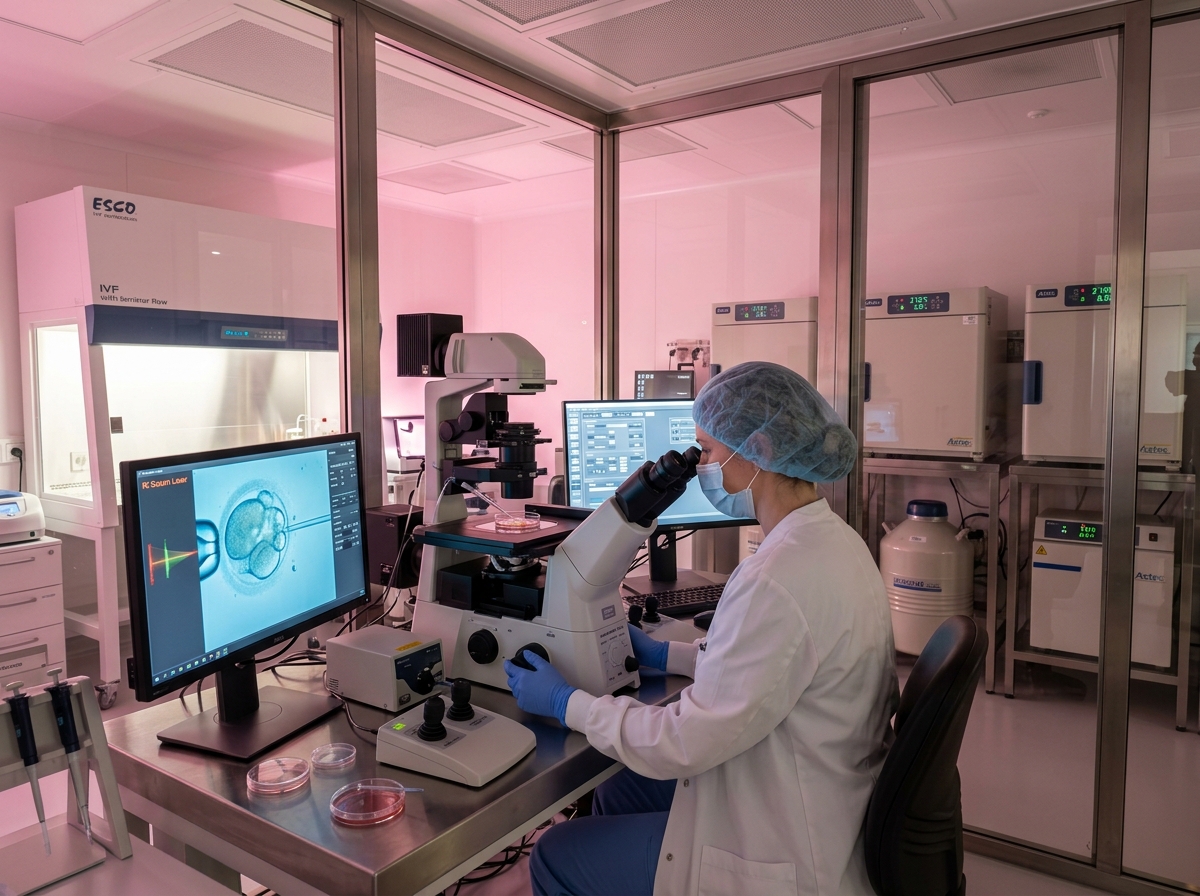
IVF laboratory technique
Assisted hatching
Assisted hatching is a laboratory procedure in which an opening or thinning is made in the zona pellucida, the outer layer around an embryo. A laser may be used for this purpose in some laboratories.
It is an optional technique and is not appropriate for every embryo or IVF cycle. Its ability to improve outcomes is uncertain. A specialist should explain why it is being considered, possible risks, limitations, and alternatives before you decide.
How the technique works
What is laser assisted hatching?
An embryo is surrounded by a protective outer layer. In assisted hatching, a laboratory specialist uses a chosen method, such as a laser, to make a small opening or thin part of that layer. The procedure is performed in the laboratory before a planned embryo transfer or other step, if it is included in the care plan.
The procedure does not ensure that an embryo will implant or that pregnancy will occur. It may also carry a risk of embryo damage. Ask the embryologist and your clinician to explain the procedure, expected benefits, risks, and alternatives in plain language.
Individualized decision
Who may discuss assisted hatching?
A fertility specialist may discuss this technique in selected situations after reviewing the treatment history and embryo details. The examples below are topics for discussion, not indications or a recommendation.
- Previous IVF or embryo-transfer history
- Embryo characteristics considered by the embryology team
- A planned treatment using embryos that have been frozen and thawed
- Other individual clinical and laboratory considerations
Age alone or a prior unsuccessful treatment does not mean assisted hatching is necessary. Ask your specialist how the evidence applies to your circumstances.
Laboratory care
What may happen during the procedure?
The laboratory’s exact method and timing can vary. The embryology team should explain the procedure being proposed for your treatment.
- 01
Embryo review
The embryology team reviews the embryo and the treatment plan to determine whether the technique is being considered.
- 02
Laboratory procedure
If agreed and available, a laboratory specialist uses the selected method to create a small opening or thinning in the outer layer.
- 03
Discussing next steps
The care team explains embryo transfer or other planned steps, along with relevant limitations and follow-up.
Informed consent
Weigh possible benefits and limitations
The potential benefit of assisted hatching is not established for every patient or cycle. It cannot guarantee implantation or pregnancy and may involve a risk of embryo damage.
Questions to ask your team
- Why are you considering this procedure for my treatment?
- What evidence and limitations are relevant to my situation?
- What are the possible risks, including risk to the embryo?
- What alternatives are available, including not having the procedure?
- Are there additional costs?
Fertility consultation
Discuss your IVF options with a specialist
Dr. Nitin Vasant Chaudhari consults on fertility care at Jalgaon IVF. The fertility and embryology team can explain whether this procedure is available and appropriate in your treatment plan.
Meet the specialistsAssisted hatching FAQs
Does assisted hatching hurt me?
The laboratory procedure is performed on an embryo, not inside the patient. Other parts of IVF may involve discomfort or risks; your clinician can explain what applies to your treatment.
Does assisted hatching increase the chance of pregnancy?
It cannot guarantee implantation or pregnancy. Whether it may provide a benefit is uncertain and depends on individual circumstances. Ask your specialist to explain the evidence, possible benefit, limitations, and alternatives for your case.
Can assisted hatching harm an embryo?
As with laboratory procedures involving embryos, there may be risks, including damage to an embryo. Ask the embryology team about how the procedure is performed and its potential risks.
Is laser assisted hatching better than other methods?
Different laboratory methods may be used. The appropriate method, availability, and possible benefits or limitations should be discussed with your fertility specialist and embryology team.
Will I need assisted hatching in my first IVF cycle?
Not necessarily. It is not required for every IVF cycle. Your specialist can explain whether it is being considered, why, and what alternatives are available.
Have questions about your care options?
Contact Jalgaon IVF to ask about a consultation and current clinic information.
This page provides general educational information and is not medical advice. Treatment options and outcomes vary by individual. Consult a qualified healthcare professional about your circumstances.